

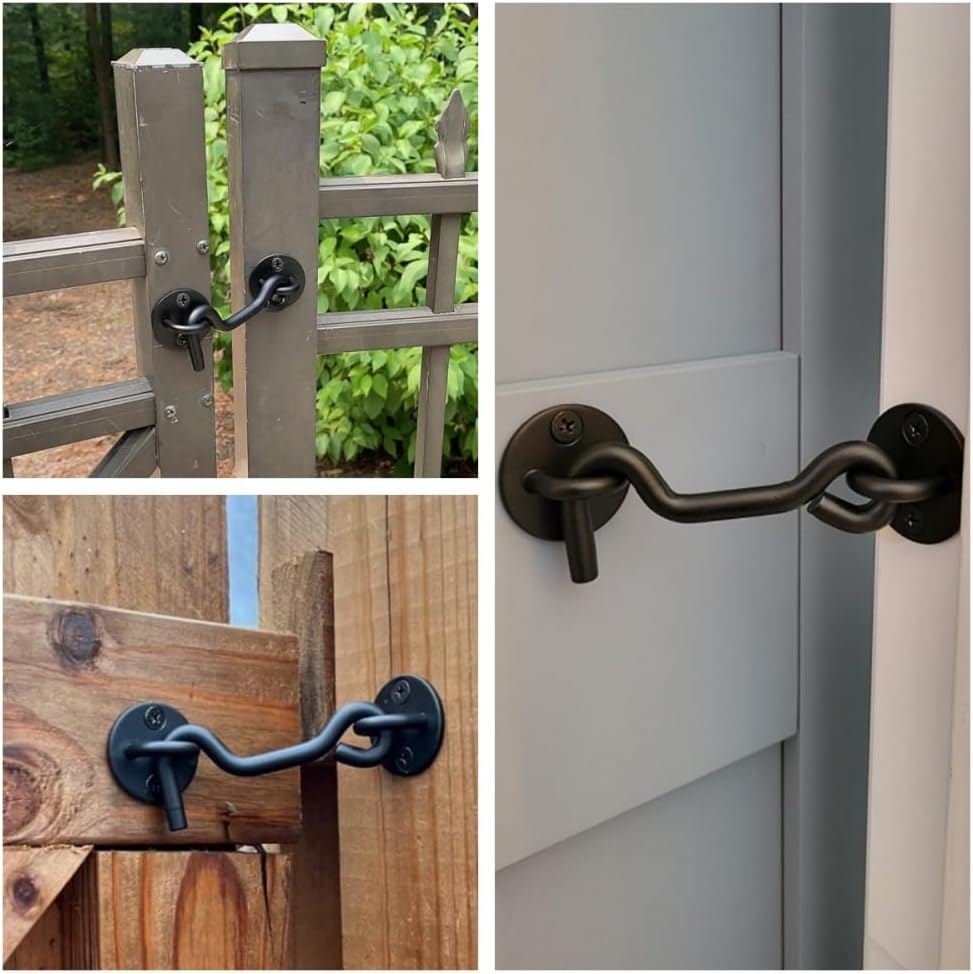

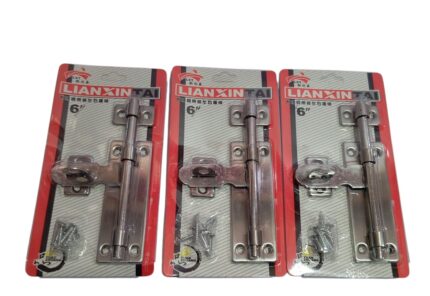
Hook and Eye Latch
Original price was: KSh 300.00.KSh 250.00Current price is: KSh 250.00.
Hook and Eye Latch
• Simple, reliable two-piece design (hook and eye) for manual operation
• Durable construction from steel, stainless steel, or brass for long-lasting use
• Easy to install with basic tools and included screws for quick setup
• Available in multiple sizes from small cabinet versions to large gate models
• Ideal for securing gates, shed doors, cabinets, barns, and furniture
• Provides a visible, positive closure that indicates when something is securely shut
• No complex mechanisms to fail—operates in all weather conditions
• Often features a corrosion-resistant finish (galvanized, powder-coated) for outdoor use
• Cost-effective security solution for a wide range of containment and closure needs
About Hook and Eye Latch
The Hook and Eye Latch is a timeless, straightforward mechanical fastener that has provided reliable security and closure for centuries, remaining a trusted solution for a wide variety of applications. Consisting of just two primary components—a solid metal hook (or “catch”) and a corresponding fixed eye (or loop)—this latch operates on a beautifully simple principle: manually engage the hook into the eye to secure, and lift it out to open.
Its enduring popularity stems from its robust simplicity, ease of installation, low cost, and fail-safe manual operation that requires no keys or complex mechanisms. A hook and eye latch is the go-to choice for securing garden gates, shed doors, interior cabinet doors, barns, fences, and even antique furniture, offering a visible, reassuring sign that an entry point is securely closed. Available in numerous sizes, from small cabinet varieties to large, heavy-duty gate models, this latch provides a versatile and effective solution for basic security and containment needs.
What Are the Typical Uses for a Hook and Eye Latch?
Understanding where to use this latch is key. The smallest sizes of hook and eye latches are perfect for cabinets, cupboards, and chests, keeping doors from swinging open accidentally. Medium sizes are ideal for garden gates, shed doors, chicken coops, and pet enclosures, providing a secure closure that’s easy to operate even with gloves on. The largest, heaviest-duty models are used on barn doors, stall doors, and large wooden gates where their substantial metal construction can withstand weather and frequent use. The hook and eye latch is also commonly used as a secondary security latch on screen doors or interior doors, adding a simple bolt-like function. Its universal design makes the hook and eye latch a fundamental piece of hardware for any DIYer or homeowner.
How Do You Install a Hook and Eye Latch Correctly?
Proper installation ensures smooth function and security. Installation is a simple, two-part process using basic tools (a screwdriver, drill, and possibly a tape measure). First, position the eye plate on the fixed frame or post. Mark and drill pilot holes, then secure it with the provided screws. Next, hold the door or gate in the closed position. Place the hook plate on the moving door so that the hook naturally aligns with and engages the eye. It’s crucial that the hook can easily slide into the eye without binding; a slight downward slope on the hook’s entry point often aids this. Mark, drill, and screw the hook plate into place. For a hook and eye latch, alignment is everything—taking a moment to ensure perfect positioning will guarantee reliable, frustration-free operation for years.
What Materials and Finishes Are Available?
Durability and aesthetics depend on material choice. Hook and eye latches are predominantly made from steel, stainless steel, brass, or zinc alloy . For outdoor applications, galvanized steel, stainless steel, or coated/powder-coated finishes are essential to resist rust and corrosion. Common finishes include **black, galvanized silver, oil-rubbed bronze, and antique brass to match other hardware. For indoor or decorative use on furniture, **polished brass or antique copper** offers an attractive, traditional look. When selecting a hook and eye latch, consider the environment: a coastal area demands stainless steel, while a rustic barn might use a heavy, hot-dipped galvanized model. The material directly impacts the longevity and security of the hook and eye latch.
Is a Hook and Eye Latch Considered Secure?
It’s important to understand its security level. A hook and eye latch provides **basic security and closure, not high-security protection**. It is excellent for keeping doors and gates closed against wind, animals, or casual opening. However, because it is externally mounted and operates manually, it is not designed to deter a determined intruder; the hook can be lifted from the outside with a tool or wire, or the screws can be forced. Therefore, a hook and eye latch is perfect for **containment, privacy, and low-risk security** (like a garden gate) but should not be the sole lock for a valuable shed or exterior entry door. For those applications, it should be paired with a separate, internal padlock hasp or a more secure deadbolt.
What is the Difference Between a Fixed Eye and a Spring-Loaded Eye?
There are subtle design variations. The **traditional hook and eye latch** has a fixed, open eye. The **spring-loaded eye latch** (or “self-latching” type) incorporates a spring mechanism that automatically closes the eye around the hook when it is engaged. This prevents the hook from accidentally bouncing out due to wind or vibration—a common issue with gates. For gates that need to stay securely latched, a **spring-loaded hook and eye latch** is highly recommended. Some models also feature a **keep or guard** around the eye to prevent the hook from being lifted from the outside without first releasing a separate catch, adding a small but useful layer of security.











Reviews
There are no reviews yet.