Product Description
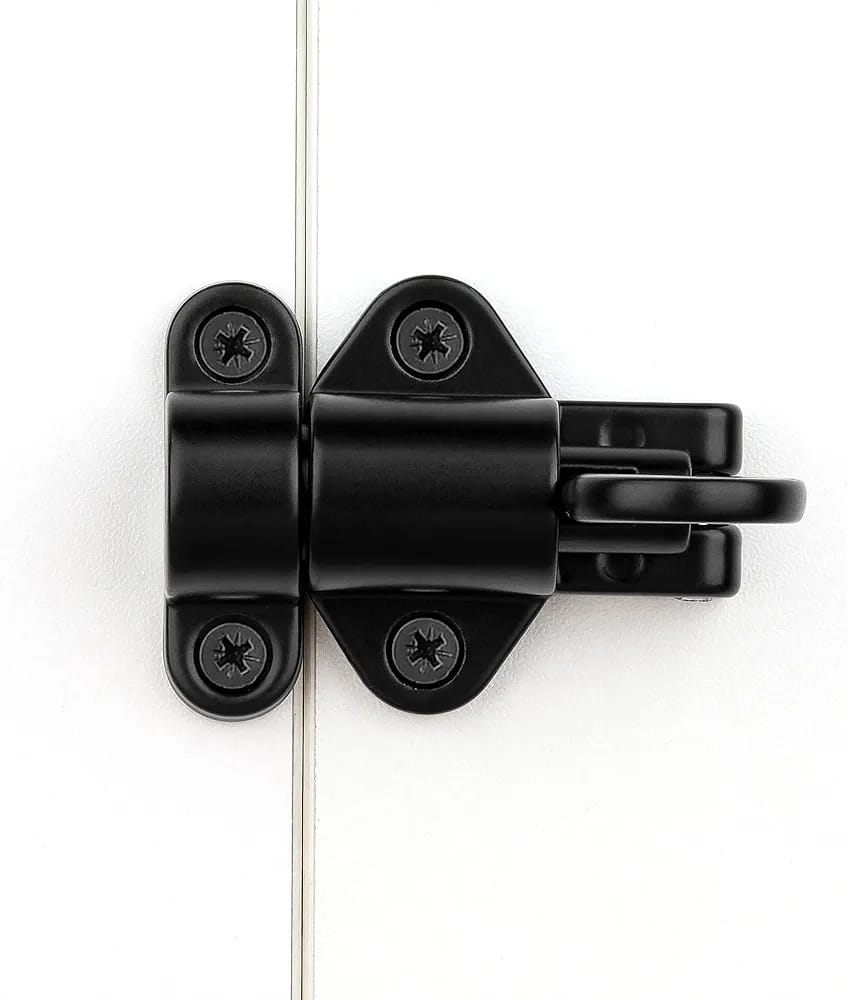
An automatic self-locking latch is a specialized latching mechanism. It automatically secures a door, gate, or panel when it is closed, without requiring any manual action to engage the lock or latch.
Unlike traditional latches that require a key turn, thumb turn, or lever push to lock, this self-latching latch engages automatically upon closure. It provides instant security and peace of mind.
The mechanism operates through a spring-loaded bolt or latch tongue that is held in a retracted position by a hold-back mechanism. When the door approaches the closed position, the hold-back mechanism is released, allowing the spring to drive the bolt forward into the strike plate, securing the door.
How Does an Automatic Self-Locking Latch Work?

Automatic Self-Locking Latch
A common question concerns its operation and reliability.
In the open position, the latch tongue is held back against spring pressure by a hold-back member or cam mechanism. During closing action, as the door approaches the frame, the strike plate triggers the release mechanism.
Automatic engagement occurs when the hold-back is disengaged and the spring drives the latch tongue forward into the strike plate, locking the door. Manual release uses a handle, knob, or key mechanism to retract the latch tongue against spring pressure to open the door.
The self-latching feature ensures the door cannot be left unsecured accidentally. It locks every time it closes.
What Types of Automatic Self-Locking Latches Are Available?
Magnetic Self-Latching Latch:
This uses a magnetic field to release the hold-back. It is best for gates, pool gates, and commercial entries. Key features include no physical contact required for release and smooth operation.
Mechanical Self-Latching Latch:
This uses a strike plate to physically release the hold-back. It is best for doors, windows, and cabinets. Key features include simple, reliable operation with no magnets to degrade.
Keyed Self-Locking Latch:
This requires a key for both entry and exit. It is best for high-security gates and commercial properties. Key features include automatic locking and rekeyable cylinders.
Self-Closing Latch:
This combines self-latching with a door closing mechanism. It is best for vehicle compartments and industrial cabinets. Key features include the door pulling itself shut with the latch engaging automatically.
What Materials and Finishes Are Available?
Engineering polymer is lightweight, rust-proof, UV-stable, and durable. It is best for residential gates, pool fences, and coastal areas.
Stainless steel offers superior corrosion resistance and high strength. It is best for marine environments and commercial security.
Zinc-plated steel is cost-effective with good corrosion resistance. It is best for indoor applications and general use.
Brass or zinc alloy offers decorative finishes and good durability. It is best for residential doors and cabinets.
What Are the Key Specifications?
The latch type is self-latching with automatic locking upon closure. Operation uses a spring-loaded bolt with a hold-back mechanism. The release mechanism can be a handle, knob, key, or remote actuator.
Mounting type can be surface mount or mortise. Materials include stainless steel, engineering polymer, and zinc-plated steel. Locking options include optional keyed cylinders that are rekeyable.
Fire rating is available for fire door applications. Adjustability features vertical and horizontal adjustment on some models.
Where Should You Use an Automatic Self-Locking Latch?
The self-latching latch is suitable for numerous applications.
For gates, it is used for pool gates, garden gates, driveway gates, and commercial property entrances. It automatically locks for safety and security.
For doors, residential entry doors, office doors, and fire doors benefit from automatic locking upon closure.
For windows, double-hung and sliding windows can incorporate self-latching mechanisms for security.
For industrial cabinets, it is used for storage compartments, electrical enclosures, and machinery guards.
For vehicle compartments, it is used for truck storage boxes, RV compartments, and tool boxes.
What Are the Benefits of a Self-Latching Latch?
Automatic security means the latch locks instantly when the door closes, with no forgotten locks. Child safety is ensured as pool gates and safety barriers automatically secure, preventing unauthorised access.
Convenience is achieved with no need to manually lock or turn a key after closing. Versatility is available in keyed and non-keyed versions for different security needs.
Durability is ensured with high-quality materials that resist weather, corrosion, and tampering.
Automatic Self-Locking Latch
Why Choose a Magnetic Self-Latching Latch Over a Mechanical One?
This distinction is critical for certain applications.
A magnetic self-latching latch uses magnetic force rather than physical contact to release the hold-back mechanism. This offers several advantages.
There is no physical wear, as no mechanical parts rub against the strike plate during release. Smoother closing occurs because the door closes without the resistance of a mechanical trigger. It is ideal for automatic closers, working seamlessly with door closers that pull the door shut.
However, a mechanical self-latching latch is simpler. It has no magnets to potentially weaken over time and is often more cost-effective for basic applications.
Automatic Self-Locking Latch available in Mombasa, Kwale, Kilifi, Lamu, Mandera, Marsabit, Isiolo, Meru, Embu, Kitui, Machakos, Makueni, Nyandarua,
Nyeri, Kirinyaga, Murang’a, Kiambu, Turkana, Samburu, Trans Nzoia, Uasin, Gishu, Elgeyo Marakwet, Nandi, Baringo,
Laikipia, Nakuru, Narok, Kajiado, Kericho, Bomet, Kakamega, Vihiga, Bungoma, Busia, Siaya, Kisumu, Homa Bay, Migori, Kisii, Nyamira, Nairobi.
In Nairobi you can find them at: Westlands, Dagoretti, Lang’ata, Starehe, Kamukunji, Embakasi, and Kasarani, Kibera, Mathare,
Eastleigh, Karen, Lavington, Westlands, Parklands, Runda, South C, South, Ngong Road
In Mombasa you can find us at : Nyali, Mwembe Tayari, Majengo, Likoni ,Bamburi, Miritini

















Reviews
There are no reviews yet.